
📍 Location: Hell’s Gate National Park, Naivasha, Kenya
⛰️ Managed by: Kenya Wildlife Service (KWS)
🌍 GPS Coordinates: 0.8945° S, 36.3166° E
🌋 Overview
The Hell’s Gate Gorge Hike is one of Kenya’s most unique and exhilarating nature walks — a journey through a deep, narrow canyon carved by water and geothermal activity over thousands of years. Located inside Hell’s Gate National Park, near Lake Naivasha, the gorge showcases dramatic sandstone cliffs, geothermal vents, and natural hot springs, offering an immersive blend of geology, adventure, and natural beauty.
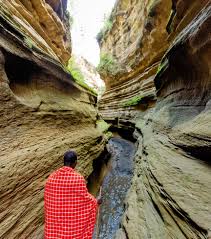
Formed by ancient geothermal and flash-flood processes, the gorge winds through towering red-and-ochre cliffs that give the park its name. It’s a landscape where steam hisses from fissures, water trickles through smooth rock formations, and every turn reveals a new scene straight out of a film — fittingly, inspiration for Disney’s The Lion King and Tomb Raider: Cradle of Life* (2003), both of which drew from the gorge’s striking topography.
🧭 Location & Access
- Nearest Town: Naivasha (approx. 25–30 minutes’ drive)
- Distance from Nairobi: 90 km (2–2.5 hours via the Nairobi–Naivasha Highway)
- Park Gates:
- Elsa Gate (Main Entrance) – ideal for self-drivers and day visitors
- Ol Karia Gate – for visitors heading directly to the Geothermal Spa
To access the gorge, visitors must enter Hell’s Gate National Park through KWS gates and pay the park’s standard entry fee. The gorge hike begins near the Lower Gorge Trailhead, about 3 km from Elsa Gate, accessible via a dirt road.
Ol Njorowa Gorge – The Heart of Hell’s Gate National Park
Ol Njorowa Gorge, often referred to simply as the Hell’s Gate Gorge, is the park’s defining geological feature — a deep, winding canyon carved by the erosive forces of water, geothermal steam, and volcanic activity over millennia. It lies at the southern end of Hell’s Gate National Park, about 3 km from Elsa Gate, and forms part of the larger Olkaria–Longonot volcanic complex in Kenya’s Great Rift Valley.
The gorge descends sharply from the surrounding savannah into a labyrinth of sandstone walls, some over 40 meters high, polished smooth by centuries of flash floods. Inside, visitors encounter narrow passageways, hot springs, fumaroles, and mineral-streaked walls in hues of ochre, gold, and red — a vivid reminder of the area’s geothermal origins. The gorge’s name, Ol Njorowa, is derived from the Maasai phrase meaning “the place of the narrow stream”, referencing the hot creek that continues to flow through its base.
Scientifically, Ol Njorowa is a living record of Rift Valley tectonics, showcasing layered volcanic ash, lava flows, and geothermal erosion in one compact area. Ecologically, its humid microclimate supports mosses, ferns, and birds such as Verreaux’s eagles, which nest on the cliffs above. Culturally, the gorge holds spiritual significance for the Maasai community, who regard the steam vents and springs as sacred sites for cleansing and renewal.
Today, Ol Njorowa Gorge is the focal point of guided hikes within Hell’s Gate, offering visitors both an adventure and a firsthand encounter with Kenya’s geothermal and cultural heritage. It’s a geological classroom, an outdoor cathedral, and one of the most dramatic landscapes in East Africa.
🎟️ Hell’s Gate Gorge Entry Fees & Conservation Fees (2025 & 2026)
🏞️ Hell’s Gate National Park Entry Fees
| Visitor Category | New Rate (Temporarily Halted) | Currency |
|---|---|---|
| Kenya Citizen | 500 | KES |
| Kenya Resident / East African Resident | 675 | KES |
| Non-Resident | 50 | USD |
Tickets must be purchased on eCitizen. Gorge conservation and guide fees are paid directly on-site.
The Gorge Conservation Fee at Hell’s Gate National Park is a mandatory charge collected by the Kenya Wildlife Service (KWS) to help maintain, repair, and manage the gorge area — especially following erosion and flood damage that periodically affects access and safety infrastructure.
As of 2025, the official Gorge Conservation Fee is:
| Visitor Category | Fee |
|---|---|
| Kenyan Citizens / Residents / East African Residents | KES 600 per person |
| Non-Residents (foreign visitors) | USD 5 per person |
🥾 The Hike Itself
🗺️ Route & Duration
The standard Lower Gorge Trail takes 1.5–2 hours round trip, covering 3–4 km of moderate terrain. There are also extended routes that can take up to 3–4 hours, depending on the visitor’s fitness and weather conditions.
You begin at the gorge entrance with a brief safety orientation by your guide. The descent leads into a winding canyon with smooth, water-sculpted walls, mineral deposits, and warm streams. Trails are marked but narrow and sometimes slippery, especially after rain.
🌄 Key Highlights Along the Trail
| Stop / Feature | Description |
|---|---|
| Entry Point / Guide Station | Registration point and briefing area; where you meet your licensed KWS guide. |
| Sandstone Cliffs | Towering ochre walls up to 40 meters high — shaped by erosion and geothermal activity. |
| The “Hell’s Kitchen” Section | Narrow gorge with steaming vents, small waterfalls, and colorful mineral streaks. |
| Hot Springs & Fumaroles | Active geothermal vents emitting steam — fascinating to see, but caution required. |
| The Devil’s Bedroom & Kitchen | Rock chambers formed by centuries of erosion — named for their dark, narrow interiors. |
| Waterfall Junction | A small waterfall fed by groundwater, perfect for photos and short rest breaks. |
| Scenic Overlook / Exit Point | Panoramic view of the gorge and surrounding escarpment before you ascend back to the trailhead. |
⏱️ Typical Hiking Schedule
| Time | Activity |
|---|---|
| 9:00 AM | Arrive at Hell’s Gate National Park (Elsa Gate) |
| 9:30 AM | Start hike at Lower Gorge Trailhead with local guide |
| 9:45 AM – 11:45 AM | Explore gorge interior – Devil’s Kitchen, hot springs, waterfalls |
| 12:00 PM | Return to trailhead; optional picnic or visit to Geothermal Spa |
| 1:00 PM – 3:00 PM | Optional add-on: Spa soak, cycling, or game drive |
| 4:30 PM | Depart Naivasha / Return to Nairobi |
🦅 Wildlife & Ecology
While the gorge itself is more geological than zoological, the surrounding Hell’s Gate ecosystem is home to zebras, giraffes, elands, gazelles, buffalos, baboons, and over 100 bird species, including vultures, augur buzzards, and Verreaux’s eagles that nest on the cliffs.
The plant life within the gorge is adapted to the volcanic soil and geothermal moisture, with ferns, acacia scrub, and moss-covered walls in the cooler sections.
🌋 Geological & Cultural Significance
Hell’s Gate Gorge is a living classroom of Rift Valley geology. The canyon was formed through the Olkaria volcanic system, part of the East African Rift’s geothermal corridor. Over centuries, flash floods and steam erosion carved the sandstone into surreal curves, creating natural chimneys, caves, and pillars.
Culturally, the Maasai people have long regarded Hell’s Gate as a place of spiritual power and purification, where geothermal steam and water symbolized the earth’s life force. Many local legends describe the gorge as a sacred space linked to the gods of fire and water.
⚠️ Safety & Best Practices
1. Always hike with a licensed guide.
The gorge can be dangerous after rain due to flash floods and slippery terrain. Guides monitor safety conditions daily and may close access during high risk.
2. Wear proper hiking shoes.
The trails involve wet surfaces, stream crossings, and minor scrambling; sturdy shoes with grip are essential.
3. Bring essentials.
Carry water, a hat, sunscreen, snacks, and a light rain jacket. Avoid plastic bags (banned in Kenya).
4. Avoid the gorge during heavy rains.
The narrow walls can flood suddenly — if closed, KWS may restrict access for safety.
5. Respect geothermal features.
Some hot springs and vents are boiling-hot and unstable; stay on marked trails and follow guide instructions.
🧑🤝🧑 Local Guides & Community Involvement
All gorge hikes are guided by licensed local guides, often drawn from nearby communities. They provide geological explanations, safety monitoring, and historical insights — while ensuring that visitors support the local economy through direct fees and tips.
Guides are coordinated at the gorge entrance station, and fees (KES 2,000 per group) are paid directly. Tipping (KES 500–1,000) is appreciated for excellent service.
🧘 Combining the Hike with Other Activities
The Hell’s Gate Gorge Hike fits perfectly into a full-day or weekend itinerary in Naivasha. Popular pairings include:
| Attraction | Experience |
|---|---|
| Olkaria Geothermal Spa | Relax in natural hot pools after your hike. |
| Cycling Safari | Rent a bike and ride from Elsa Gate to the gorge (KES 1,000 per bike). |
| Fischer’s Tower Climb | Rock climbing on the 25-meter volcanic spire near the park entrance. |
| Lake Naivasha Boat Ride | See hippos, fish eagles, and Crescent Island. |
| Crescent Island Walking Safari | Guided walk among giraffes and zebras (accessed by short boat transfer). |
| Mount Longonot National Park | Crater hike for experienced trekkers nearby. |
Hell’s Gate Gorge Hike Itinerary (Full Experience)
📍 Location: Hell’s Gate National Park, Naivasha, Kenya
⏱️ Total Duration: 2.5–3 hours (standard route)
📅 Best Time: 8:30 AM – 12:00 PM (avoid midday heat or late afternoon rain)
🔹 7:30–8:00 AM – Arrival & Registration (Elsa Gate)
- Arrive at Hell’s Gate National Park’s Elsa Gate, located along Moi South Lake Road.
- Present your eCitizen park ticket and register for the gorge hike.
- Pay KES 600 / USD 5 Gorge Conservation Fee and KES 2,000 guide fee per group.
- Receive a safety briefing from your local KWS-certified guide.
- Optional: rent a bicycle (KES 1,000) to cycle the 3 km scenic road to the gorge trailhead.
🔹 8:15–8:45 AM – Trailhead Orientation & Descent into the Gorge
- Meet your guide at the Lower Gorge Trailhead.
- Brief on terrain, geothermal safety, and flash flood signs.
- Begin your descent into the gorge via a sloping sandstone pathway lined with acacia and lava rock.
- Pause for photos overlooking the Great Rift Valley escarpment and the Fischer’s Tower in the distance.
🔹 8:45–10:15 AM – Explore the Lower Gorge
- Enter the main canyon, walking through smooth, water-carved walls and steaming vents.
- Key highlights along this section:
- Hell’s Kitchen: narrow corridors with geothermal steam and mineral-streaked walls.
- Devil’s Bedroom & Kitchen: natural rock chambers named for their dramatic heat and shape.
- Hot Springs: warm trickling streams perfect for short stops (avoid direct contact with vents).
- Natural Waterfall Junction: small pool formed by groundwater seepage; scenic rest stop.
- Your guide explains the geological layers, flash-flood history, and Maasai legends tied to the gorge.
🔹 10:15–10:45 AM – Optional Extended Hike (Upper Gorge Loop)
- For fit hikers, continue along the Upper Gorge Trail, climbing toward panoramic viewpoints.
- Spot Verreaux’s eagles, rock hyrax, and klipspringers along the cliffs.
- Return along the same path or take a loop exit route to the upper rim.
🔹 10:45–11:15 AM – Ascent & Exit
- Begin the gradual climb out of the gorge via the exit trail.
- Pause for sweeping views of Mount Longonot, Olkaria steam fields, and the savannah plains below.
- Rehydrate and rest at the trailhead picnic area.
🔹 11:15–12:00 PM – Optional Add-On Activities
- Geothermal Spa Visit (10–15 min drive): soak in naturally heated blue lagoons at Olkaria Geothermal Spa (entry KES 400 local / USD 15–18 foreign).
- Rock Climb at Fischer’s Tower: guided climb on 25 m volcanic spire (extra fee).
- Cycling Safari: continue exploring the park by bike before returning to Elsa Gate.
🔹 12:00–12:30 PM – Picnic or Lunch Stop
- Enjoy a picnic at designated areas (Naiburta, Ol Dubai, or the Spa café).
- Spot zebras, giraffes, and buffaloes grazing nearby.
🔹 12:30–1:00 PM – Departure
- Return to Elsa Gate or proceed to Lake Naivasha, Crescent Island, or Olkaria Spa for the afternoon.
- Estimated travel time back to Nairobi: 2–2.5 hours (arriving around 4:00 PM).
💡 Expert Tips
- Start before 9:00 AM to avoid heat and crowds.
- Wear grippy hiking shoes — trails can be wet and slippery.
- Carry 1L of water per person, sunscreen, and a light jacket.
- Always hike with a licensed guide — essential for safety and navigation.
- The gorge may close after heavy rains; check with KWS Hell’s Gate Office (+254 725 965 268) before traveling.
🕐 Best Time to Visit
- Dry Season (June–October, January–March): Ideal for hiking; minimal risk of flooding.
- Wet Season (April–May, November): Gorge may close intermittently due to flash flood risk.
- Hours: Park opens 6:00 AM – 6:00 PM; last entry to gorge 3:30 PM.
🧾 What to Bring
- Hiking shoes or sandals with grip
- Hat, sunscreen, sunglasses
- Drinking water (min. 1 liter per person)
- Snacks or packed lunch
- Light jacket
- Waterproof phone case or dry bag
- Camera or binoculars
🏨 Where to Stay Nearby
- Camp Carnelley’s – relaxed, budget-friendly lakeside camp
- Lake Naivasha Sopa Lodge – mid-range lodge with wildlife on the grounds
- Sawela Lodge – upscale resort near Moi South Lake Road
- Fisherman’s Camp – ideal for backpackers and small groups
- Naivasha Kongoni Lodge – luxury option close to Hell’s Gate
🌿 Conservation & Sustainable Tourism
The gorge is part of the Hell’s Gate–Olkaria Geothermal ecosystem, where conservation and energy coexist. The area hosts KenGen’s geothermal power stations, which provide over half of Kenya’s renewable electricity. By visiting the gorge, travelers support the Kenya Wildlife Service and local community initiatives that balance eco-tourism with clean energy development.
At HellsGatePark.org, we advocate for low-impact travel — respecting trails, minimizing waste, and supporting local guides — ensuring that the gorge remains a natural wonder for generations to come.
📞 Visitor Contacts
- Hell’s Gate National Park Office (KWS): +254 725 965 268
- KenGen Geothermal Spa (for spa add-on): +254 711 036 000
- HellsGatePark.org (Tour Bookings): bookings@hellsgatepark.org
🌟 In Summary
The Hell’s Gate Gorge Hike is more than just a trek — it’s a journey through geology, geothermal power, and Kenyan heritage. With its breathtaking cliffs, warm streams, and the hum of natural steam rising from the earth, it’s one of the few places in the world where you can literally walk through the planet’s living crust. Safe, scenic, and sustainable, this hike is a must-do for anyone visiting Naivasha or the Great Rift Valley.
FAQs on Hiking Hell’s Gate Gorge
(Compiled by the HellsGatePark.org team)
🥾 Trail Conditions & Difficulty
1. How difficult is the Hell’s Gate Gorge hike?
The main Lower Gorge route is moderate — suitable for most visitors with average fitness. It involves uneven surfaces, stream crossings, and light scrambling. The upper gorge extension is steeper and recommended for fit hikers comfortable with mild elevation gain.
2. Is the trail clearly marked?
No — the gorge trails are natural and unmarked. That’s why a licensed local guide is mandatory for all visitors entering the gorge. The terrain constantly shifts due to erosion, making local knowledge essential for safety and navigation.
3. What footwear and clothing are best?
Wear closed hiking shoes with good grip (avoid sandals). The ground can be slippery from geothermal moisture. Light, breathable clothing is best, with a hat and sunscreen for the open sections.
⚠️ Weather & Flash Flood Risk
4. Is it safe to hike during the rainy season?
The gorge can become dangerous after heavy rains due to flash flooding. Kenya Wildlife Service (KWS) may temporarily close the gorge if conditions are unsafe. Always confirm at the Elsa Gate before your hike.
5. What causes flash floods in the gorge?
The surrounding cliffs act as a natural funnel, and rain — even from distant hills — can send torrents of water into the narrow canyon. These sudden floods have historically reshaped sections of the gorge.
6. When is the safest time to visit?
During dry months (June–October and January–March). Start early (before 9:00 AM) to avoid midday heat and ensure enough time to complete the hike safely.
🌋 Geology & Natural Features
7. What makes Ol Njorowa Gorge geologically special?
It’s one of the most visible examples of Rift Valley erosion and geothermal shaping. Layers of volcanic ash, lava, and sandstone show how geothermal steam and flash floods have sculpted the landscape for centuries.
8. Are there active geothermal features inside the gorge?
Yes. You’ll encounter steam vents, fumaroles, and small hot springs. They are natural but should be observed from a safe distance — the steam and water can exceed 90°C (194°F).
9. Why are parts of the gorge sometimes closed to tourists?
Sections may close temporarily due to erosion, maintenance, or flood repair. The Kenya Wildlife Service conducts regular geological assessments to ensure visitor safety.
🧭 Guides, Safety & Local Regulations
10. Are guides mandatory for the gorge hike?
Yes. Due to safety concerns, it is compulsory to hike with a registered local guide. Guides are trained to read weather patterns, identify flood risk zones, and navigate new channels formed by erosion.
11. Where do I hire a guide?
Guides are stationed at the Lower Gorge Entrance near the Hell’s Gate ranger post. You can hire one on arrival — no advance booking required.
12. How much should I tip the guide?
Tipping is voluntary but appreciated. A typical range is KES 500–1,000 per group, depending on the length and quality of the tour.
13. Is hiking alone allowed?
No. Solo hiking in the gorge is strictly prohibited for safety reasons. Even experienced hikers must be accompanied by a guide.
🦓 Wildlife & Ecology
14. Are there wild animals inside the gorge?
Large mammals rarely enter the narrow gorge, but the upper cliffs are home to baboons, hyraxes, klipspringers, and eagles. Occasionally, small herbivores like gazelles can be spotted near the entrance.
15. What kind of vegetation grows inside the gorge?
A mix of ferns, mosses, fig trees, and shrubs thrives due to the warm, moist microclimate and geothermal humidity — contrasting sharply with the dry savannah above.
📸 Photography & Filming
16. Can I take photos inside the gorge?
Absolutely — photography is encouraged. The gorge’s light, color, and texture make it one of Kenya’s most photogenic natural sites. However, commercial filming or drone use requires prior KWS permits.
17. What are the best times for photography?
Between 8:00–10:00 AM, when sunlight filters between the canyon walls and highlights the red sandstone layers.
🧘 Cultural & Educational Insights
18. Why do locals call it “Hell’s Gate”?
Early explorers named the area after the steaming vents and geothermal plumes rising from the earth — reminiscent of “the gates of hell.” For the Maasai, however, the area is sacred and symbolizes healing and renewal through the earth’s energy.
19. Can the gorge be visited as part of a study or educational tour?
Yes. Hell’s Gate and Ol Njorowa Gorge are popular field sites for geology, environmental science, and tourism students. Academic groups can arrange study visits through KWS Education & Outreach or partner operators such as HellsGatePark.org.
🧳 Logistics & Add-ons
20. How much time should I allocate for the gorge?
The full hike takes about 2–3 hours, plus time for rest and photos. For a combined itinerary with the Olkaria Geothermal Spa, plan 4–6 hours total inside the park.
21. Can I combine the gorge hike with other activities in the park?
Yes, and it’s highly recommended. Popular combinations include:
- Morning gorge hike + Olkaria Geothermal Spa soak
- Cycling safari + hike + picnic
- Hike + rock climbing at Fischer’s Tower
22. Is there mobile phone signal inside the gorge?
Signal is weak to none inside the canyon due to the depth of the walls, but you’ll regain connection near the trailhead or park gate.
🧾 Payments & Administration
23. How do I pay for gorge fees?
- Park entry: Paid via eCitizen before arrival.
- Gorge conservation & guide fees: Paid in cash (KES or USD equivalent) directly at the gorge station.
24. Can I visit the gorge without entering the national park?
No. The gorge lies fully within Hell’s Gate National Park, so all visitors must first purchase a valid KWS park ticket.
🕊️ Sustainability & Responsible Tourism
25. How does the Gorge Conservation Fee help?
It funds trail restoration, safety signage, guide training, flood prevention works, and community support programs in Naivasha. Paying this fee directly contributes to keeping the gorge safe and open for future generations.
26. How can visitors help preserve the gorge?
Stay on marked paths, avoid littering, do not deface rock walls, and follow your guide’s instructions. Respect geothermal features — the delicate mineral formations can be permanently damaged by contact.
✅ In Summary
Hiking the Hell’s Gate Gorges (Ol Njorowa) is a thrilling, educational experience that blends geology, adventure, and conservation in one of Kenya’s most accessible Rift Valley landscapes. With proper guidance, respect for the environment, and awareness of safety protocols, it’s one of the most rewarding half-day hikes in East Africa — and a must-do for anyone exploring Naivasha and Hell’s Gate National Park.